
Stop Answering the Same Questions: The AI Policy Bot for Architecture Firms
“How much PTO do I have?” “Can I expense parking at the client site?” “Can I work remotely next Friday?” “What’s our policy on using ChatGPT?” None of these are bad questions. Employees need answers. The problem is who has to answer them. In a 10-, 25-, or 50-person architecture firm, questions like these frequently…
Read More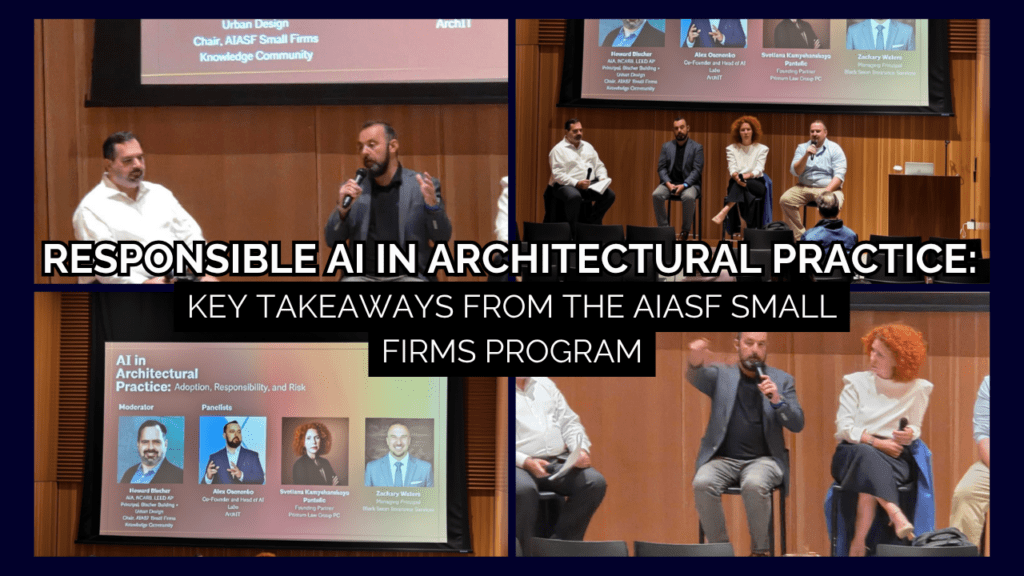
Responsible AI in Architectural Practice: Key Takeaways from the AIASF Small Firms Program
Artificial intelligence is becoming part of everyday architectural practice, supporting research, correspondence, proposals, design exploration, documentation, and firm operations. As these tools become more capable, firms must also consider security, confidentiality, professional responsibility, and client trust. These topics were discussed during AI in Architectural Practice: Adoption, Responsibility, and Risk, an AIASF Small Firms program held…
Read More
The Submittal Lifecycle Skill: Building One End-to-End AI Workflow
From Three Workflows to One Complete Submittal Lifecycle Submittals are essential to construction administration, but managing them can consume a significant amount of an architecture firm’s time. Each package must be received, logged, compared against project requirements, reviewed, returned, tracked, and sometimes processed again as a resubmittal. The work demands professional judgment, yet it also…
Read More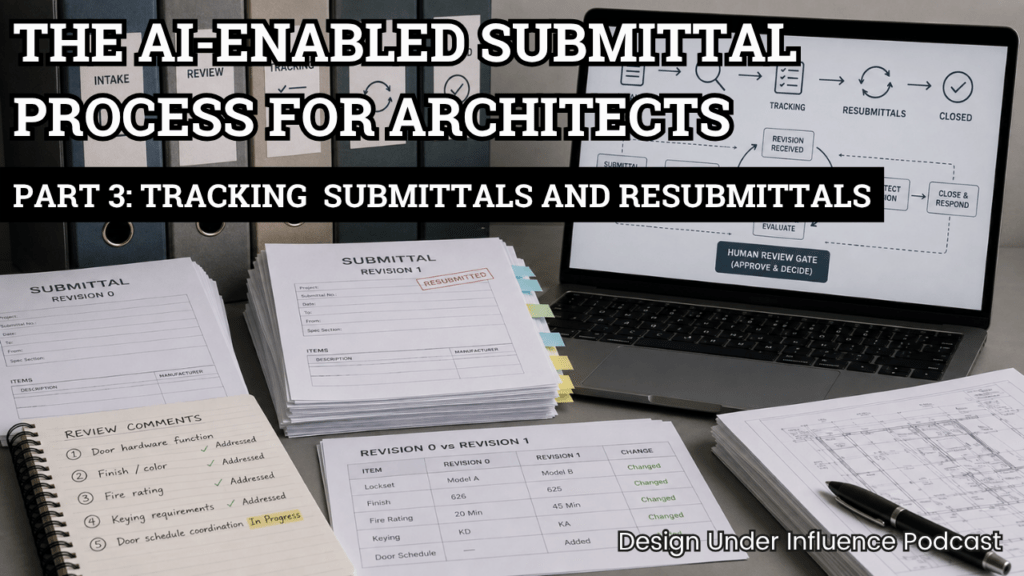
The AI-Enabled Submittal Process for Architects Part 3: Tracking Architectural Submittals and Resubmittals
AI Closes the Loop on the Architectural Submittal Process Submittal review does not end when an architect returns a package marked “revise and resubmit.” Someone still has to track the open item, receive the next revision, compare it with the original submission, confirm whether every comment was addressed, update the project record, and prepare the…
Read More
The AI-Enabled Submittal Process for Architects Part 2: Submittal Review
How AI can organize the evidence while the architect keeps the decision Submittal review is not difficult because of one isolated comparison. The burden comes from repeatedly moving between specifications, drawings, schedules, product data, review templates, prior decisions, and correspondence – often under tight deadlines and within a fee-compressed phase of the project. In Part…
Read More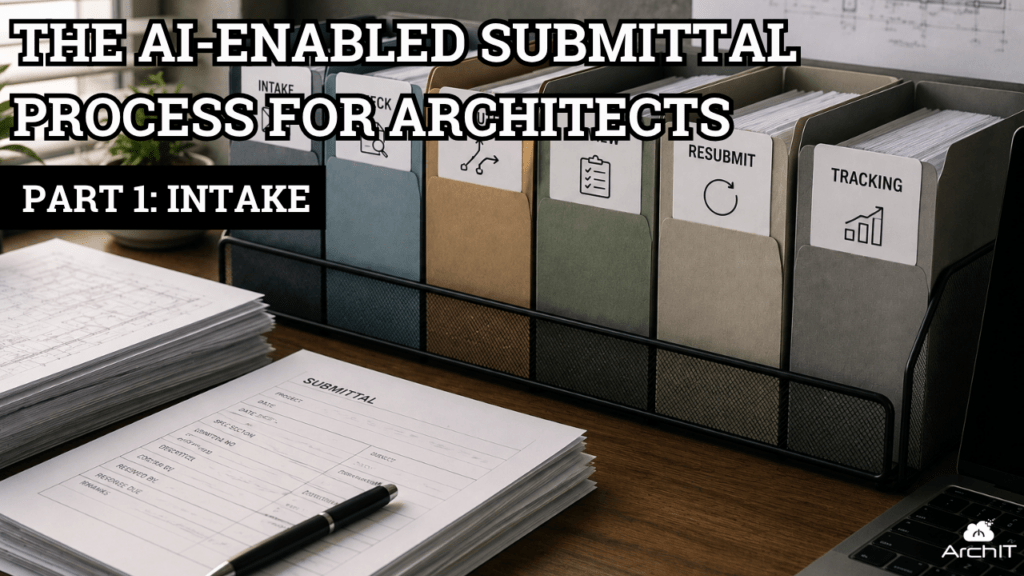
The AI-Enabled Submittal Process for Architects. Part 1: Intake
A single submittal is usually manageable. It arrives, someone checks it, logs it, routes it to the appropriate reviewer and returns the response to the contractor. The challenge appears when that process is multiplied across dozens, or potentially hundreds of submittals and resubmittals on multiple active projects. What looks like a straightforward workflow quickly becomes a significant administrative…
Read More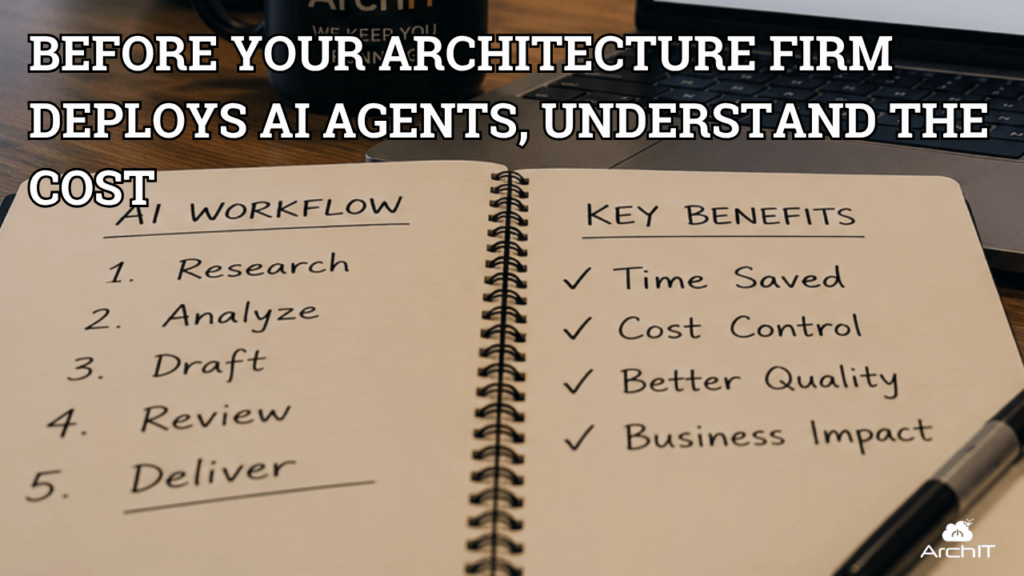
Before Your Architecture Firm Deploys AI Agents, Understand the Cost
“A workflow that costs $10 but saves a principal two hours may produce an excellent return. A recurring agent that costs hundreds of dollars but creates little measurable value should be redesigned or discontinued.” AI adoption in architecture firms usually begins quietly. A few employees open personal ChatGPT accounts. Someone uses Copilot to summarize meeting…
Read More
Why Organized Data Is the Foundation for AI Success
Data organization. In this episode of Design Under Influence, Alex sits down with Liz, Megan, and special guest Basil to talk about the foundation work that must happen before AI can deliver real value. From folder structures to workflow discipline, the conversation makes one thing clear: AI is only as powerful as the data you…
Read More
The AI Adoption Blueprint for AEC Firms: Policies, Guardrails, and Real Use Cases
Artificial intelligence is no longer a future concept for architecture, engineering, and design firms – it is already reshaping how teams work every day. From proposal writing and operational workflows to BIM coordination and internal automation, AI tools are becoming deeply embedded in the AEC industry. The real challenge is no longer whether firms should…
Read More
AI in AEC: Stop Chasing Tools. Start Fixing the Business.
Artificial intelligence is rapidly becoming part of daily operations in architecture, engineering, and construction (AEC). New tools appear constantly, promising to automate BIM workflows, improve project coordination, or generate proposals faster. For many small and mid-sized firms, this creates pressure to adopt everything quickly in order to avoid falling behind. But focusing only on tools often leads…
Read More