
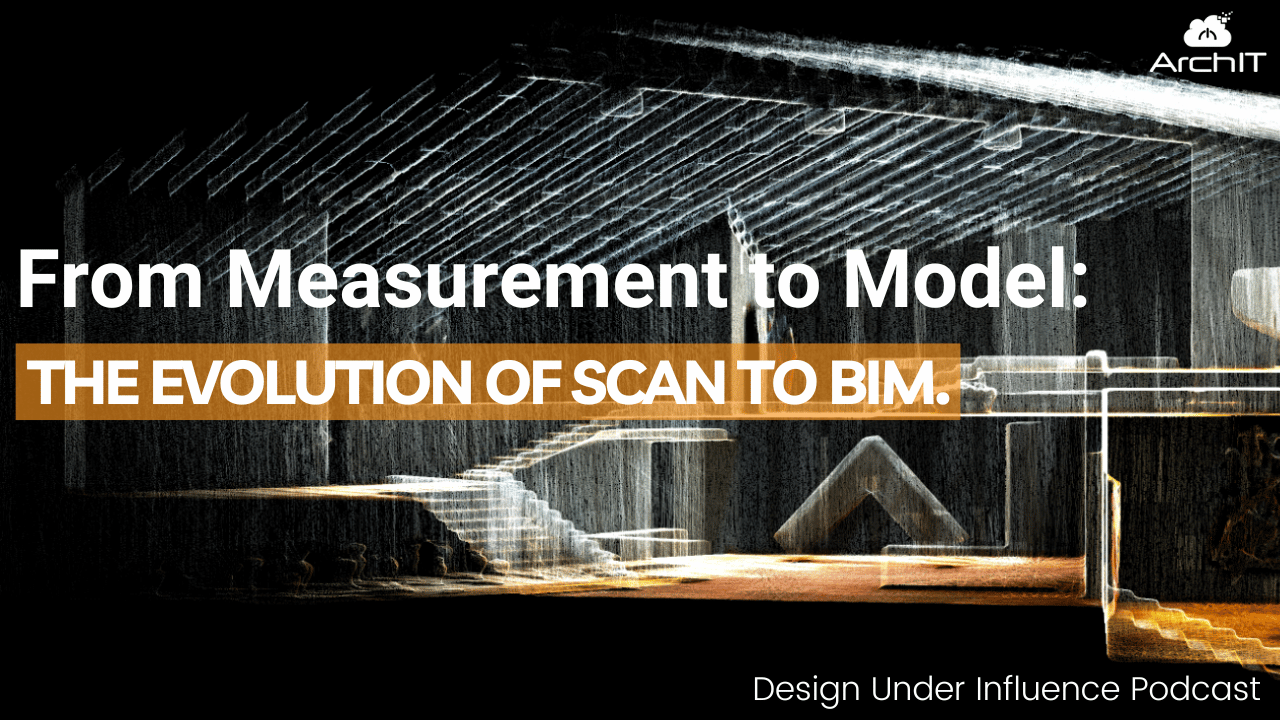
From Measurement to Model: The Evolution of Scan to BIM
The architecture, engineering, and construction (AEC) industry continues to embrace digital transformation, and one of the most groundbreaking advancements is Scan to BIM technology. What once required days of manual measurement, sketches, and site revisits can now be completed in hours through precision scanning and intelligent modeling. As this technology evolves, it’s reshaping how architects, engineers, and project teams document, analyze, and design both new and existing structures.
Understanding Scan to BIM
At its core, Scan to BIM refers to the process of capturing a physical space using laser scanning or photogrammetry and converting that data into a digital Building Information Model (BIM).
The workflow generally involves three major steps: Scan, Convert, and Model.
- The Scan:
Modern scanning tools range from highly precise survey equipment to simple smartphone applications. Laser scanners emit millions of laser points to create what’s known as a point cloud—a dense collection of data points representing every visible surface in a space. These points can even store color and image overlays, creating a visual and measurable 3D snapshot of reality. - The Conversion:
While it may seem like a one-click process to turn a point cloud into a complete model, this stage remains highly manual. Skilled technicians interpret the scan, identify building elements like walls, floors, and beams, and construct the digital geometry layer by layer. Real-world imperfections—crooked walls, uneven floors, or obscured details—require careful judgment and human oversight. - The Model (BIM):
Once converted, the data becomes a living digital model that can be used for design, renovation, analysis, and facility management. Unlike static CAD drawings, BIM models are intelligent—they store data about materials, dimensions, and building systems, allowing for advanced simulations and lifecycle management.
Real-World Applications
One of the most common uses of Scan to BIM is in renovation and historical preservation projects. Older buildings often lack accurate documentation, and traditional drawings may be unreliable or incomplete. With scanning, project teams can capture precise geometries—even in hard-to-reach or fragile spaces—without invasive methods.
For example, in renovation projects involving complex roof structures or aged mechanical systems, point clouds help engineers plan retrofits without guesswork. The resulting accuracy reduces coordination errors, site visits, and rework—saving time and money.
Technical and Practical Challenges
Despite its benefits, Scan to BIM is not without hurdles. Point cloud files are enormous, often requiring powerful local machines and storage solutions. While online viewers allow teams to explore scans virtually, integrating this data into modeling software can be demanding.
Another challenge lies in converting the scan into a usable BIM model. Real-world buildings are imperfect, and scans often capture clutter, furniture, and other obstructions. The interpretation process requires experience and precision to ensure the model reflects design intent rather than every physical irregularity.
Moreover, smaller projects may not need millimeter-level precision. Over-modeling can waste time and resources. Understanding the appropriate Level of Detail (LOD) for each project is key to maintaining efficiency.
The Role of Artificial Intelligence
Artificial intelligence is poised to revolutionize the “conversion” step in Scan to BIM workflows. Emerging algorithms can already identify and classify elements such as doors, windows, and structural components within point clouds.
Future developments may allow AI-driven software to recognize building systems, estimate component dimensions, and even ask clarification questions to improve accuracy. As machine learning improves, this once time-consuming process may soon become largely automated—reducing costs and democratizing access to high-quality scans for projects of any size.
From Digital Twins to Smart Cities
The implications of Scan to BIM extend far beyond individual projects. When integrated with GIS and IoT systems, these detailed digital models can form the foundation for “digital twins” of entire facilities—or even cities.
Some regions already require digital as-built models for public infrastructure to optimize maintenance, energy efficiency, and resource management. As technology advances, these interconnected models will serve as the backbone of smart city planning, merging architecture, data, and sustainability in real time.
Conclusion
Scan to BIM technology represents a remarkable shift in how the built environment is documented and understood. By bridging the gap between physical and digital worlds, it enhances accuracy, collaboration, and long-term asset management.
While challenges remain—particularly in data processing and automation—the progress of AI and cloud computing continues to close the gap. As accessibility increases, even small firms and independent practitioners can leverage the same tools once reserved for large-scale projects.
The future of measurement and modeling is here—and it’s transforming how the AEC industry sees, shapes, and sustains the world around us.
If you have questions or need help please reach out to us. ArchIT specializes in providing IT services for architecture, design, and engineering firms.